Green Floral Alphabets, Magical Flowers
When I sit down to evaluate a new digital asset for my embroidery workflow, I am rarely looking for just another pretty picture. As a designer who regularly produces custom apparel and boutique merchandise, I need to know if a design will translate cleanly from the screen to the hoop. I recently reviewed Green Floral Alphabets, Magical Flowers, an illustration that promises a blend of botanical charm and typographic utility. My goal here is to strip away the marketing gloss and look at this file through the lens of practical application, stitching behavior, and commercial viability.
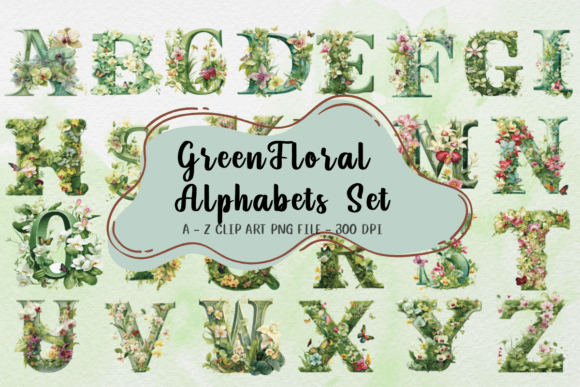
The first thing that strikes me about Green Floral Alphabets, Magical Flowers is its mood. It feels organic yet structured, which is a delicate balance in embroidery design. The theme leans heavily into the "magical" aspect mentioned in the title, suggesting a whimsical, perhaps slightly vintage or fairy-tale aesthetic. This isn’t a stark, modern sans-serif block; it is likely filled with intricate details, vines, leaves, and petal-like flourishes. For a crafter or Etsy seller, this visual personality is valuable because it immediately communicates quality and care. It suggests a handmade product rather than a mass-produced one.
Real-World Application: From Screen to Stitch
To truly understand the value of this design, we have to imagine it on actual products. Let’s take a common scenario: preparing a custom embroidered tote bag for a local craft fair or an online shop. You want something that stands out but remains legible. If I were using Green Floral Alphabets, Magical Flowers for a personalized name tote, the floral elements would soften the text, making it feel more like a piece of art than a label. The green tones suggest freshness, which pairs beautifully with natural fabrics like canvas, cotton, or linen.
However, the versatility extends far beyond tote bags. Consider the market for baby items. A onesie or a nursery wall hanging featuring this design could be incredibly appealing. The "magical flowers" theme fits perfectly with nursery decor trends that favor soft, nature-inspired motifs. When designing for babies, parents are often looking for items that feel gentle and safe. The organic shapes of the alphabets likely provide that sense of warmth. Similarly, for holiday gifts, such as Christmas stockings or Easter baskets, the floral element adds a touch of elegance that generic holiday icons might lack.
I also see potential in the realm of home decor. Pillow covers and tea towels are staples for small business owners. Applying Green Floral Alphabets, Magical Flowers to a kitchen towel allows the design to act as a focal point without overwhelming the utility of the item. The contrast between the crisp white fabric and the detailed thread work would highlight the craftsmanship involved. It elevates a simple household item into a gift-worthy object.
Technical Performance and Visual Clarity
From a technical standpoint, the success of any machine embroidery design relies on how well the file handles stitch density and detail. When reviewing Green Floral Alphabets, Magical Flowers, I am looking for clarity. Does the text remain readable, or do the floral decorations obscure the letters? In high-quality files, the alphabetic structure usually serves as the anchor, with the flowers acting as supportive fill stitches or satin outlines.
If the design utilizes a mix of satin stitch for the letter edges and fill stitch for the internal floral patterns, it should hold up well on stable fabrics. However, the complexity of the "magical" aspect means there may be smaller details. This brings us to the importance of testing. Before committing to a final product, always test the design on scrap fabric. This step is non-negotiable for professional results. You need to verify that the stitch density is appropriate for your specific fabric weight. Thin fabrics may pucker under dense floral fills, while heavy denim might hide the finer details of the flower petals.
Thread color selection is equally critical. The green tones in the design likely require a specific palette to pop. On dark fabrics, you might need to use a lighter shade of green or add a contrasting outline to ensure the design doesn’t get lost in the background. Conversely, on light fabrics, the greens can appear vibrant and fresh. I recommend creating black-and-white mockups during the planning phase to check the contrast and layout balance before even loading the thread.
Where Caution Is Required
No design is perfect for every situation, and Green Floral Alphabets, Magical Flowers has its limitations. I would advise against using this design on highly textured fabrics, such as thick terry cloth or boucle, unless you are experienced with stabilizer choices. The intricate details of the flowers could get swallowed by the fabric pile, resulting in a muddy appearance. Similarly, stretchy knits require careful handling. If the design lacks sufficient tear-away or cut-away stabilizer support, the tension changes during stretching could distort the alphabetic shapes.
Another area of concern is small hoop sizes. If you attempt to digitize or resize this design to fit a very small area, such as a child’s sock or a tiny patch, the fine details of the magical flowers may disappear. Tiny lettering combined with complex floral fills can become illegible when scaled down. It is best suited for medium to large applications where the eye has room to appreciate the nuances of the artwork.
Curved surfaces, like caps or sweatshirt hoods, also present challenges. While the design might look flat and beautiful in a digital preview, the transition over a curve can cause distortion. For curved garments, I prefer simpler designs with fewer overlapping elements. Green Floral Alphabets, Magical Flowers might work on a flat panel of a cap front, but it requires precise hooping and possibly a flexible stabilizer to maintain its integrity.
Commercial Value and Brand Consistency
For Etsy sellers and small shop owners, the aesthetic appeal of a design directly impacts customer trust and engagement. A well-executed embroidery project signals professionalism. When customers see that the embroidery file translates cleanly into a finished product, they are more likely to believe in the quality of the entire brand. Green Floral Alphabets, Magical Flowers offers a unique selling proposition because it combines personalization (the alphabet) with decorative flair (the flowers). This combination allows for higher perceived value compared to plain text designs.
Furthermore, this design supports brand consistency. If your shop focuses on nature-inspired, whimsical, or bohemian styles, this asset fits seamlessly into your collection. It can be used across various product lines—from custom apparel to digital product previews—creating a cohesive visual identity. The ability to offer personalized versions of this design adds a layer of service that customers love, driving repeat business.
Final Designer Notes
- Test First: Always run a test stitch-out on your actual production fabric to check for puckering or thread breaks.
- Stabilizer Choice: Use a sturdy stabilizer that matches the fabric weight to prevent distortion of the floral details.
- Contrast Check: Ensure high contrast between the thread colors and the fabric background for maximum readability.
- Licensing: Verify the license terms before selling finished goods. Some digital embroidery files have restrictions on commercial use.
- Mockups: Create realistic mockups to show customers how the finished product will look in different lighting and on different materials.
In conclusion, Green Floral Alphabets, Magical Flowers is a strong candidate for designers seeking to add a touch of whimsy and elegance to their projects. Its strength lies in its ability to merge functional typography with decorative beauty. By paying attention to fabric choice, stabilizer support, and proper testing, you can leverage this design to create high-quality, desirable products that resonate with buyers. It is not just a graphic; it is a tool for building a reputable handmade brand.